

In a bid to boost the greentech space in Uganda, the Stanbic Business Incubator Limited (SBIL) has partnered with the French Embassy in Uganda to support the youth and women entrepreneurs active in the sector.
“The Stanbic Greentech Accelerator Program, supported by the Embassy of France in Uganda, not only marks another chapter of our partnership, but also Stanbic’s commitment to driving Uganda’s growth.” Catherine Poran, the Chief Executive of the SBIL, said during the program’s launch at Protea Hotel in Kampala recently.
“Blending the green business model in Uganda’s economic growth is crucial for ensuring sustainable development, protecting the environment, fostering inclusive growth and job creation, as well as building resilience to climate change.”

Green business models prioritise sustainability in all aspects of the business, aiming to reduce an enterprise’s environmental footprint, while creating both economic and social value.The new program is a two–year initiative targeting 200 women and youth-owned micro-enterprises in sectors like sustainable agriculture, green mobility, circular economy, waste management, renewable energies, water and health, and natural resource management.
To be implemented in the Kampala Metropolitan Area and the Albertine Region, it aims promote the development of a green, resilient, and highly innovative economy through strengthening capacities, facilitating access to finance and markets, as well as creating a conducive growth environment.SBIL is the enterprise development subsidiary of Stanbic Uganda Holdings Limited (SUHL). To date, the incubator has steered the growth of over 5,700 small and medium enterprises (SMEs), through training programs centred on three key pillars: access to finance, access to markets and business operational skilling.
Poran said, “After seven years, the Stanbic Business Incubator has gained the well-deserved position as a leading resource centre for supporting the development and sustainable growth of SMEs. For the record, during 2024, shs 76 billion in loans and credits were availed to SMEs by Stanbic Bank. This new program will benefit 120 SMEs from Kampala Metropolitan, and 80 in the Albertine.”
“The National Development Plan (NDP) IV highlights that Uganda is one of the most entrepreneurial countries globally. However, the survival rates and ability of Micro, Small, and Medium Enterprises (MSMEs) to transition to the next level are quite low.”
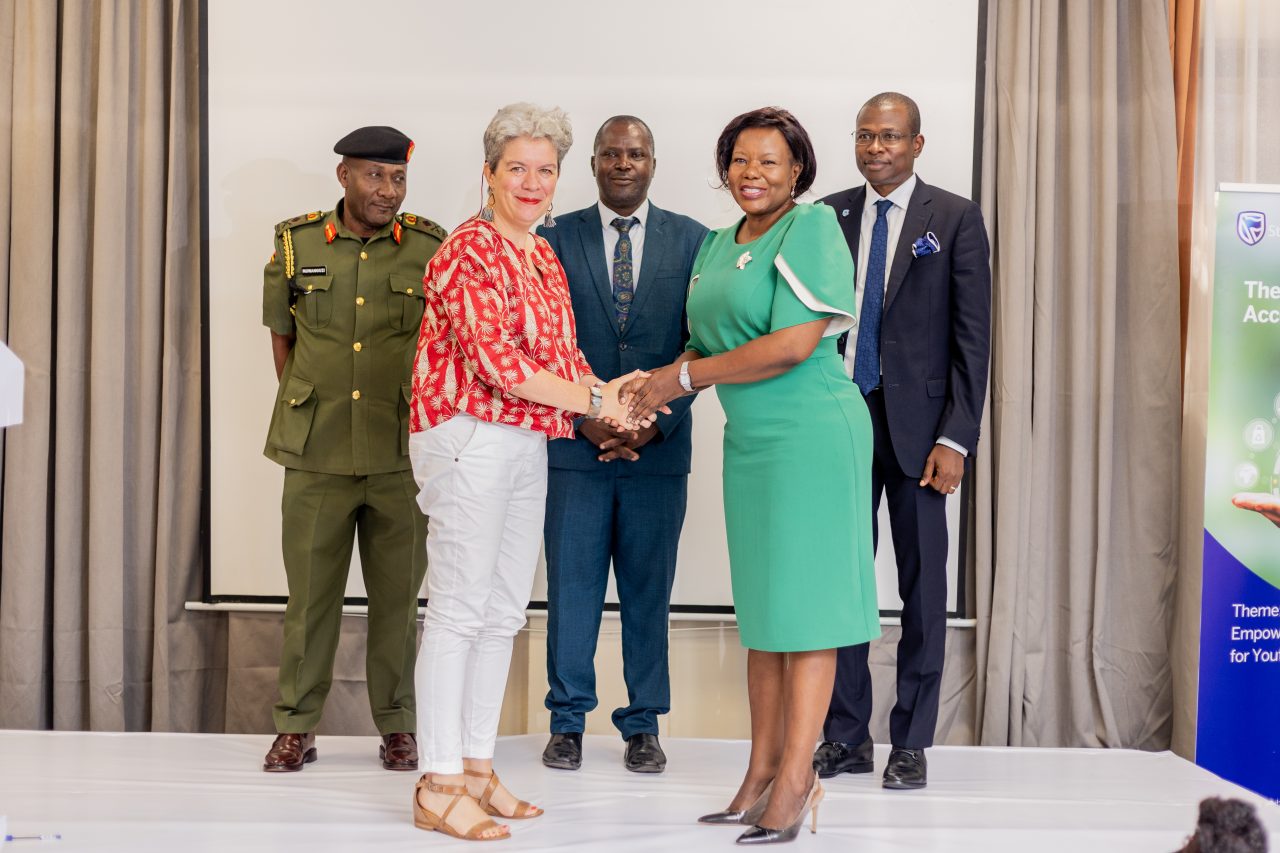
The French ambassador to Uganda, Mrs. Virginie Leroy, said, ”We are very happy to join Uganda to contribute to the solution, and as Catherine said, to grasp all the opportunities, not only talking about risk, but talking about opportunities for job creation and for the development of Uganda. The project is a continuation of a previous project.”
She said the earlier project, Network for Innovation and Sustainability in Agriculture and Tourism (NISAT), also in partnership with SBIL, supported 110 micro, small and medium-sized enterprises (MSMEs) in agroecology, eco-tourism, training, coaching, mentorships and micro grants to build sustainable businesses and create new jobs for Ugandan youth.
“The latest initiative is bigger, and more ambitious, but also with a target to support more young people in the green economy,” Mrs Leroy said.
The Stanbic Greentech Accelerator Program is estimated to cost €687,833 (Shs 2.8 billion), including a €450,000 (Shs 1.8 billion) grant from the French Embassy. Of this grant, €131,351 (Shs 552 million) will be disbursed in the first installment. Stanbic Bank will co-finance the project with €237,833 (Shs 998 million), representing 34.5% of the total cost.
James Karama, Stanbic Bank’s Head of Client Coverage in Corporate and Investment Banking (CIB), said, “Stanbic Uganda Holdings Limited is a member of Standard Bank Group, Africa’s largest bank by assets. Our group’s purpose is Africa is our home; we drive her growth, and this guides everything that we do.”
“The same thing happens in Uganda. Uganda is our home, and we drive her growth. The launch of the Stanbic Greentech Accelerator Program, in partnership with the French Embassy in Uganda, is a good expression of that purpose. It reflects our shared belief that Africa’s development must be sustainable.”
Karama added, “We have chosen to focus on women, youth and farmers (the WYF Agenda), because they form the backbone of our economy. So, through this program, we are investing in innovation in green enterprises and, most importantly, in people. We are creating opportunities for those who hold the promise of Uganda’s future.”
“Through this agenda, we are intentionally directing our financial and non-financial resources towards financial inclusion, enterprise development, job creation, infrastructure investment and climate resilience.”
Johnson Abitekaniza, the Assistant Commissioner for Micro, Small and Medium Enterprise at Uganda’s Ministry of Trade, Industry and Cooperatives, said, “The government has come up with a green strategy. We have also set up a desk at the Ministry of Finance, which is looking at those issues.”