


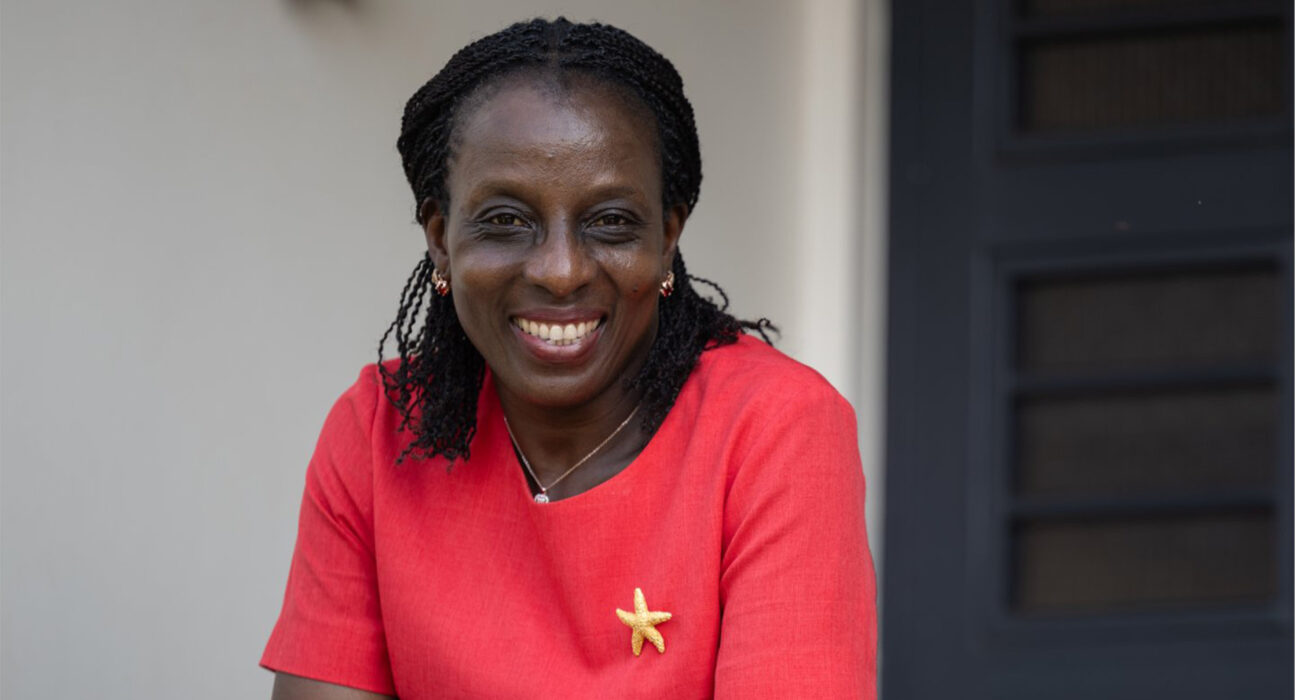
Big institutions are often best understood through the lives of the people who work for them. As Stanbic Bank marks 35 years in Uganda, Pauline Wantate offers a rare view from the inside.
For over 37 years in banking, she witnessed the industry reinvent itself: branches opening and closing, technology replacing manual processes, and customers moving from queues to mobile phones.
Through it all, she remained a constant presence, serving generations of Ugandans and retiring with an unblemished record. This is her account of change, service and belonging.
What kept you going for 37 years at one bank?
People often ask how someone can spend an entire working life in one place. For me, the answer is simple: I enjoyed the work. What I miss most about Stanbic is not the position or the reports. It is the routine. I miss waking up early, preparing for the day, going to the office and engaging with colleagues and customers. Routine bores many people. It never bored me. It kept me in check.
I joined Uganda Commercial Bank (UCB) on 2 May 1988 as a Banking Assistant in Masaka. Uganda was emerging from years of turmoil, and banking was still a very manual business. We posted entries by hand, balanced ledgers ourselves and served everyone from savers to business owners.
Looking back, what amazes me is not how much banking has changed, but how much purpose it gave me. The bank became the place where I grew up professionally. In many ways, it made me who I am.
What is the hardest thing you ever did for work?
Without hesitation, working in Kyamulibwa. I was transferred there early in my career. The branch was 27 kilometres from Masaka. There were no taxis, no boda bodas and no suitable accommodation nearby.
Every day, I travelled in a truck that transported cattle between Gomba and Masaka. Sometimes I sat in the co-driver’s seat. Sometimes I rode in the back after the cattle had been unloaded. I would tie a scarf around my head, wrap a lesu around my waist and climb aboard.
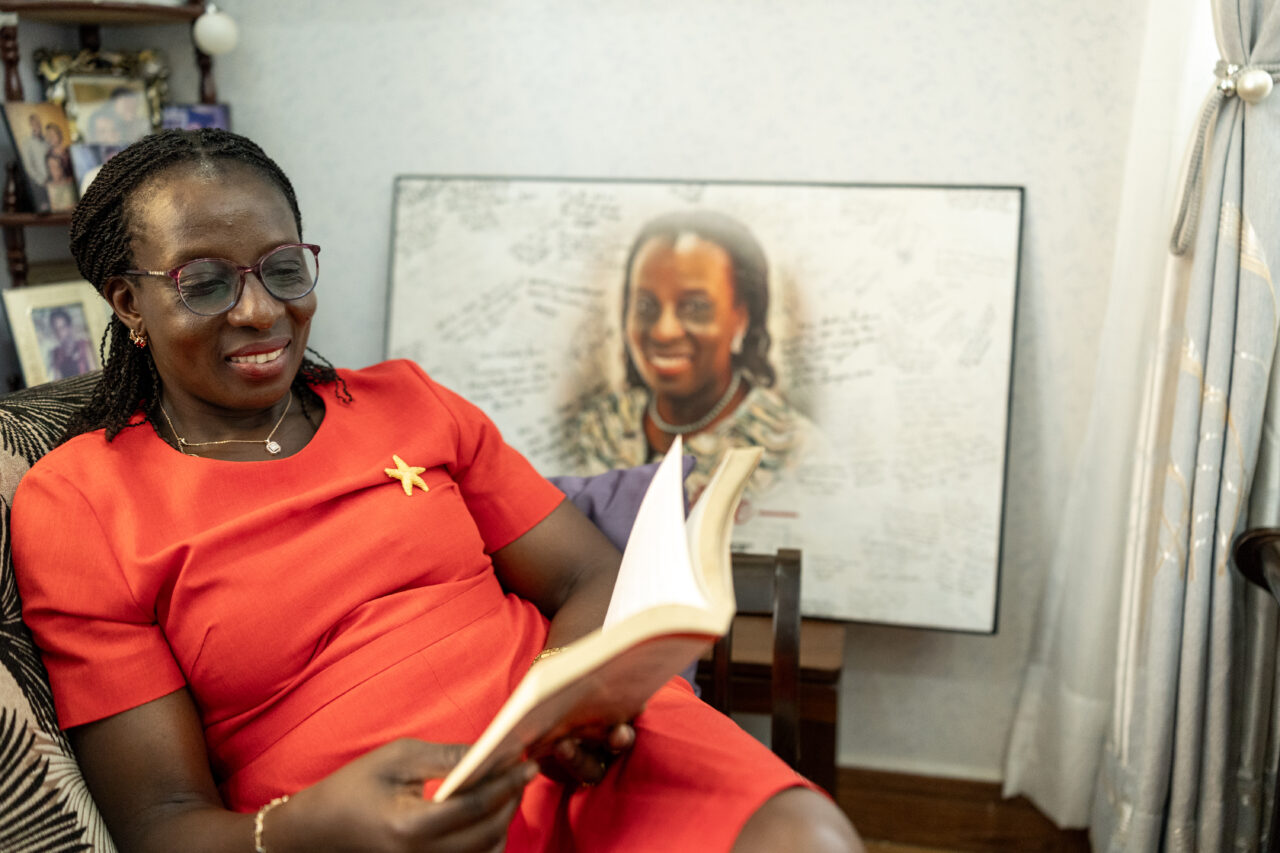
Pauline reading a book at her home
The journey was not glamorous. The road was poor. The truck often broke down. Most of my allowances disappeared into transport costs.
After a year, I had made up my mind: if the bank did not transfer me, I would leave banking altogether.
Yet those difficult journeys taught me a lesson that stayed with me throughout my career. Work is not always comfortable. Sometimes you keep showing up because the people you serve are expecting you to be there.
What was banking like before technology transformed everything?
Today’s bankers would probably find it difficult to imagine. When I worked at the Mulago branch as a supervisor, customers would arrive carrying sacks of money. We had no counting machines. We counted the cash ourselves, by hand.
In those days, branches were the centre of everything. Customers came to us for nearly every transaction. At the beginning of school terms, queues stretched for miles.
What strikes me now is how much trust customers placed in us. Banking was personal. People knew their branch. They knew the staff. They knew who handled their accounts. Technology has changed almost everything since then, but trust remains the foundation.
How did the Stanbic merger change the culture of banking?
When Standard Bank Group merged with UCB in 2002, many employees were anxious. We did not know what the future would look like. What surprised us was how quickly the culture changed.
At UCB, hierarchy was very important. People were defined by titles. Managers occupied offices. Interactions followed formal lines.
Stanbic introduced a different way of working. We were encouraged to address one another by name—first name, actually. Leaders operated an open-door policy. Staff sat together in shared workspaces. There was a stronger emphasis on specialisation and teamwork.
The physical spaces changed almost overnight. Sometimes you would leave work on a Friday and return on Monday to find an entirely refurbished branch, complete with an Automated Teller Machine standing where there had been none before.
Looking back, those changes signalled something bigger than new technology. They reflected a different way of thinking about customers, employees and the future of banking.
Why do customers still trust Stanbic?
Because the bank has never stopped adapting. When I started working, we rarely went out looking for business. Customers came to us. Today, banking follows the customer.
Over the years, Stanbic introduced internet banking, agent banking and digital channels that allow people to bank from their homes, workplaces or neighbourhoods. Many parents now pay school fees using a phone. Customers who once spent hours in queues can complete transactions in minutes.
But technology alone does not create trust. Trust comes from understanding what customers need and developing solutions that solve their problems. Stanbic’s growth has always been linked to that principle: listen carefully, then respond meaningfully. Without the customer, there is no bank. Without the customer, there is no job.
What achievement are you proudest of?
Not a promotion. Not a title. Not even the awards. What gives me the greatest satisfaction is something far simpler: I left with my integrity intact. In 37 years of banking, I never received a verbal warning. I never received a written warning. I never faced disciplinary action.
That matters enormously in a profession built on trust. Of course, there were other proud moments. In 2015, I received the Stanbic Mark of Excellence Award as the country’s best service ambassador. The recognition included a trip abroad with my daughter, during which we visited Amsterdam and Dubai.
It was a wonderful experience. But the award recognised something I had believed for years: service matters.
What does retirement feel like?
Different, but not empty. During the COVID-19 pandemic, I started a bakery at home. Today, I bake cakes and cookies for different celebrations. At weddings, I still find myself inspecting the cake first, especially if it is a fruitcake.
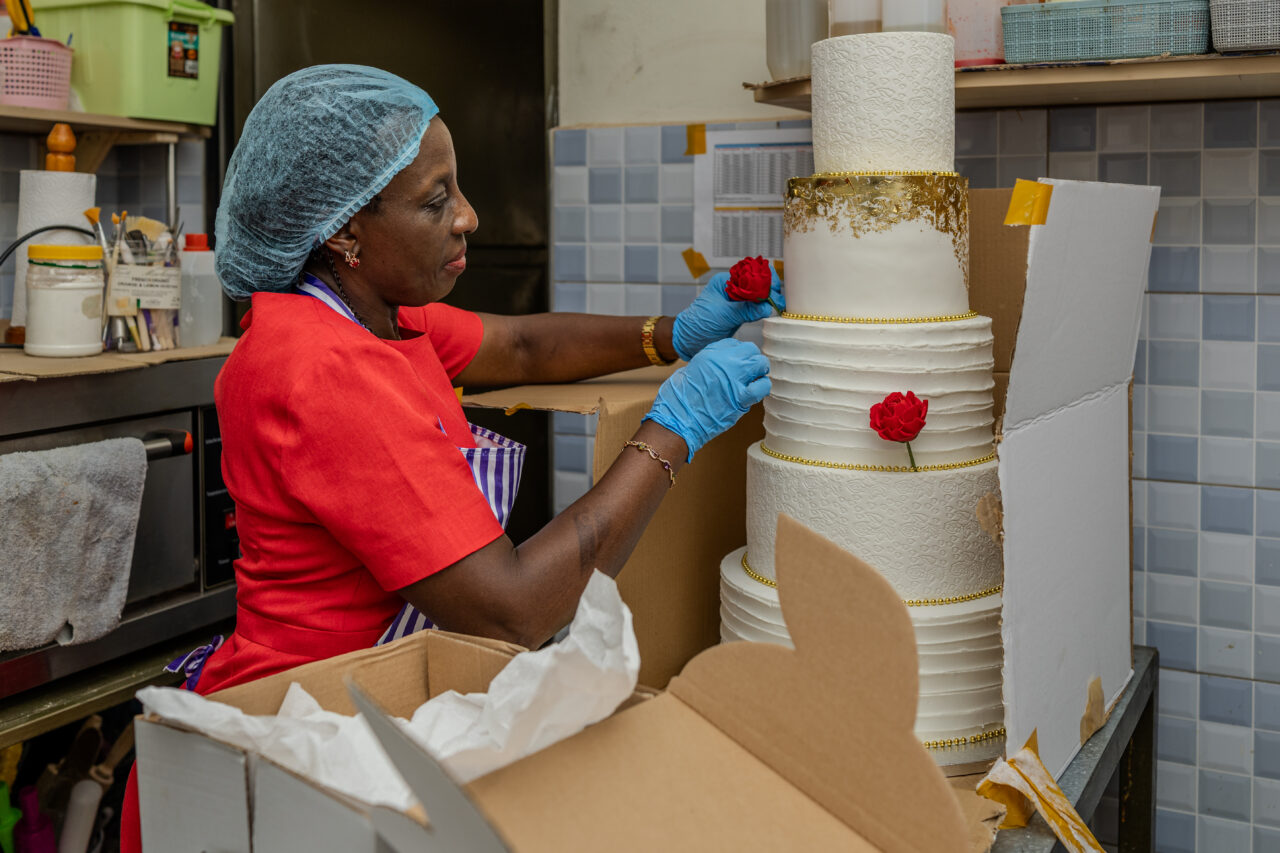
Pauline working in her bakery at home
Rotary also keeps me busy. People often invite me to speak about retirement because many workers struggle to imagine life after employment. They want to know what changes and what remains.
I tell them retirement is not the end of a story. It is simply another chapter. The habits you cultivate during your working life come with you. That is probably why I still wake up early.
And why, even now, after all these months away from the office, I still find myself thinking fondly about the blue brand. Because when I look back on nearly four decades in banking, one truth remains unchanged: Stanbic made me who I am.