


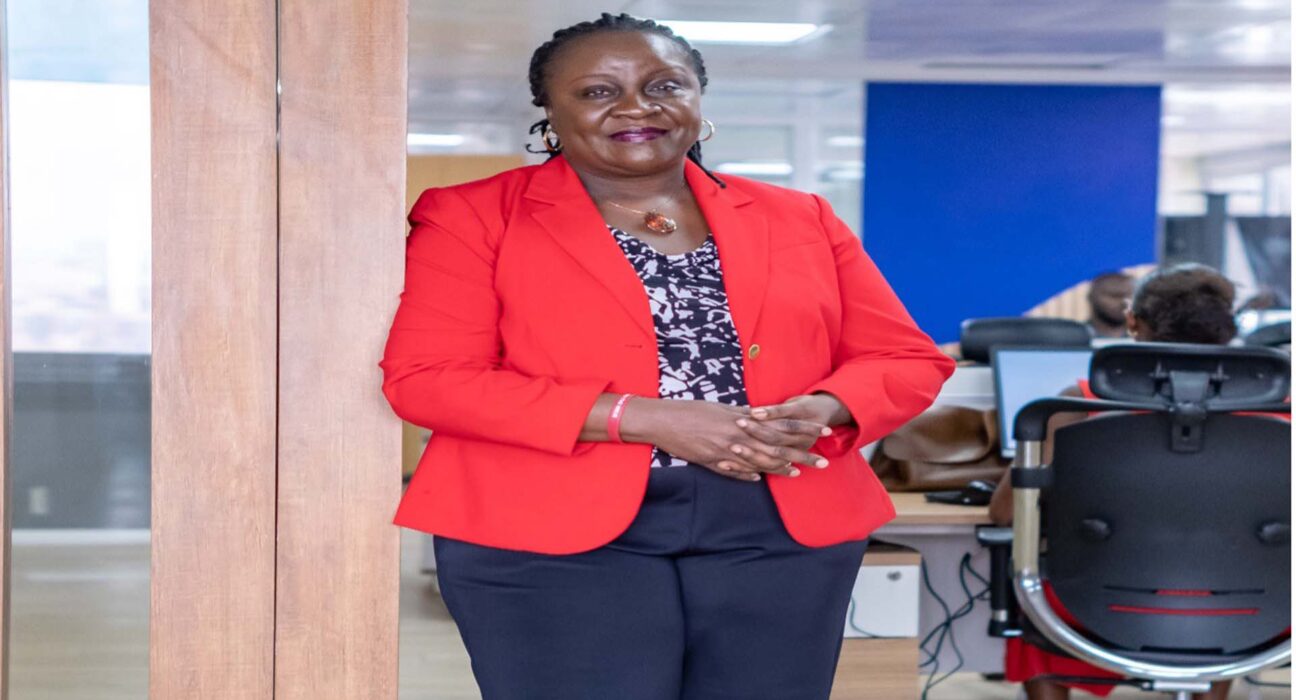
In an age when careers are often defined by movement, Josephine Kabaga built hers on a different choice: staying put. Fresh from university, she joined Grindlays Bank and went on to witness one of the most significant chapters in Uganda’s banking history: the acquisition by Standard Bank Group in 1991 and the evolution of what is now Stanbic Bank Uganda following the acquisition of Uganda Commercial Bank. Along the way, she received a dozen offers—in banking and beyond– rejecting them all to stay with Stanbic.
Now, as the bank marks 35 years of operations in Uganda, Josephine’s story offers a unique perspective on that journey. She has seen the bank transform and grow through two mergers, serving generations of customers, colleagues and communities while remaining part of its story from the very beginning.
In many ways, Josephine’s journey mirrors the bank’s own. Both chose long-term commitment over short-term opportunity. Both put down roots. As the Bank made Uganda home, it also became family for Josephine. Now, as she approaches retirement after more than three decades of service, Josephine looks back with pride and gratitude for the opportunity to have served. This is her tale of a remarkable career, but also of a bank whose greatest legacy is the people who choose to grow with it. This is Josephine’s story—in many ways, Stanbic’s.
Where should we start?
(She laughs).
In 1992.
I was working with a local bank after graduating from Makerere University with a Bachelor of Science in Agriculture. On May 4, 1993, I joined ANZ Grindlays Bank as a clerk deployed in the Foreign Services Unit, which is now called Operations.
Earlier on, the Standard Bank Group of South Africa had started talks to acquire ANZ Grindlays Bank—simply called Grindlays Bank. By this time, the bank was still under the management of ANZ Grindlays Bank, as the acquisition was being concluded.
Foreign Services Unit?
Yes—I know it sounds like a unit in an embassy, but my work there was to process international financial transfers, which were at that time called telegraphic transfers. A year or so later, I was transferred to the Priority Banking Department as a teller. This department was dedicated to serving international organisations, embassies, UN agencies and their staff.
I worked my way to an officer position—which I held between 1997 and 1999—before becoming the Relationship Manager in the same department from 2000 to 2004. These were very interesting roles because I handled clients from various countries. One has to be astute when managing bank-client relationships.

Josephine chats with colleagues at Stanbic Bank
Was that a branch or headquarters-based service?
Actually, the bank had one branch located on Plot 45 on Kampala Road, which is currently occupied by the Bank of Uganda. It remained in the same place after being acquired by Standard Bank Group.
But a year later, Standard Bank Group opened the second branch in Lugogo. By the time it merged with Uganda Commercial Bank (UCB) in 2002, we still had only two branches.
How much has banking changed?
A lot. A whole lot. For instance, we used to open at 8:30 a.m. and close at 2:00 p.m. But the staff would remain in the bank, manually counting money and balancing stuff until 4:00 p.m. We knew all our clients because there were not many.
Today, branches close at 5 p.m.; counting is much easier with machines, and self-service technologies ensure that customers don’t need to check into a branch to transact.
There are more than 6 million bank account holders. Having an account is no longer for the privileged few—it also goes to show how Uganda has economically advanced over the years, as seen with deeper financial inclusion.
Was it always your dream to work in banking?
My early dream was actually to study medicine because I wanted to help people and make a meaningful contribution to their lives. However, I ended up studying agriculture at university.
Initially, it felt like a departure from my original plan, but I soon realised that agriculture is also about improving lives through food security. After university, life took me in yet another direction and into banking.
At first, it was an unexpected move, but I came to appreciate that banking is also a powerful way of helping people. Through providing financial services, supporting businesses, creating opportunities, and helping individuals achieve their goals, I found another avenue to make a positive impact.
Looking back, I realise that while my career path changed several times, my underlying purpose remained the same: helping people improve their lives. And that is how I reconciled with where I am today.
Looking back at the era of ledgers and manual processes, was there ever a moment when you felt like quitting banking altogether?
I don’t think it was that overwhelming because, quite frankly, we didn’t know what we didn’t know. Many of the processes were manual, which meant you couldn’t work in isolation and had to intentionally engage with colleagues to get things done. That created strong, long-lasting relationships and helped us learn from one another.
It also made it easier to understand transactions from the ground up because you were involved in every step. As a result, I never really thought about quitting. I was constantly learning new things, which kept me interested, and I gradually began to feel, ‘I actually like it here.”
You have witnessed two mergers—Grindlays to Standard Bank, then the UCB acquisition—how did you adapt to change in culture?
Grindlays Bank was a niche institution, mainly serving corporate businesses and a few individuals, both national and international, deployed in embassies, UN agencies and a few corporate companies. Grindlays Bank had acquired National Bank of India a few years earlier, but it still had a small team of staff.
When Standard Bank Group acquired the Bank, the staff numbers increased. I was young and excited about the change. I had witnessed two acquisitions by Standard Bank—Grindlays and Uganda Commercial Bank—and I was still excited about the future. As time went on, Stanbic introduced digital banking, and that changed a lot in terms of how we managed clients and transactions.
Also important is the fact that the bank instantly became a dominant national player after merging with UCB, which had a large network of branches and customers. Then the bank started bringing on board new products. A positive and curious attitude was a big factor in my transitioning through culture changes.
Did the changes come with new responsibilities for you?
Oh yes! Stanbic Bank has always been keen on what the customers want. The Bank introduced retail banking. I was also privileged to pioneer Executive in 2000. The bank later realised there were clients who needed an extra service, and I was tasked with starting private banking around 2010.
In 2019, I moved to Business and Commercial Banking as a Segment Manager before moving to governance and execution, where I served from 2020 to 2022. This role allowed me to travel around the country to interact with small and medium-sized enterprises, which the bank supports.
What was it like after the merger with UCB?
There were some stakeholder reservations. People did not immediately trust us because we were a small bank taking on a large national institution—but behind the small bank was a continental banking force, the Standard Bank Group, which had been in banking for more than a century.
There was also temporary confusion between Standard Chartered Bank and us. But because we were transparent in our dealings with clients, people soon embraced us.
This was further supported by a resonating purpose: Uganda is our home; we drive her growth, which signalled our commitment. It is this purpose that has led us to expand our products to include unit trusts, mortgages, and savings and investment, among others.
Some people pushed the narrative that the bank would not be in business for long after the merger. It has been 35 years in business, and the bank continues to grow alongside Uganda. Some staff chose to retire because they were not certain of the future. But some, especially the young ones like me at the time, stayed.
Over 30 years with one employer is rare; what is the secret?
The answer is quite simple: I was treated well. From early in my career, we have enjoyed a genuine open-door culture. If you have an idea, you simply walk into your manager’s office, explain it, and receive support in turning it into reality. There is a sense that your views matter, regardless of your position.
We were also given the freedom to make mistakes responsibly, if that makes sense. Of course, we were expected to learn from them, but that environment allowed us to grow, build confidence, and ultimately become better bankers.
Looking back, many of the skills and experiences that shaped my career were the result of leaders who trusted us enough to let us learn.

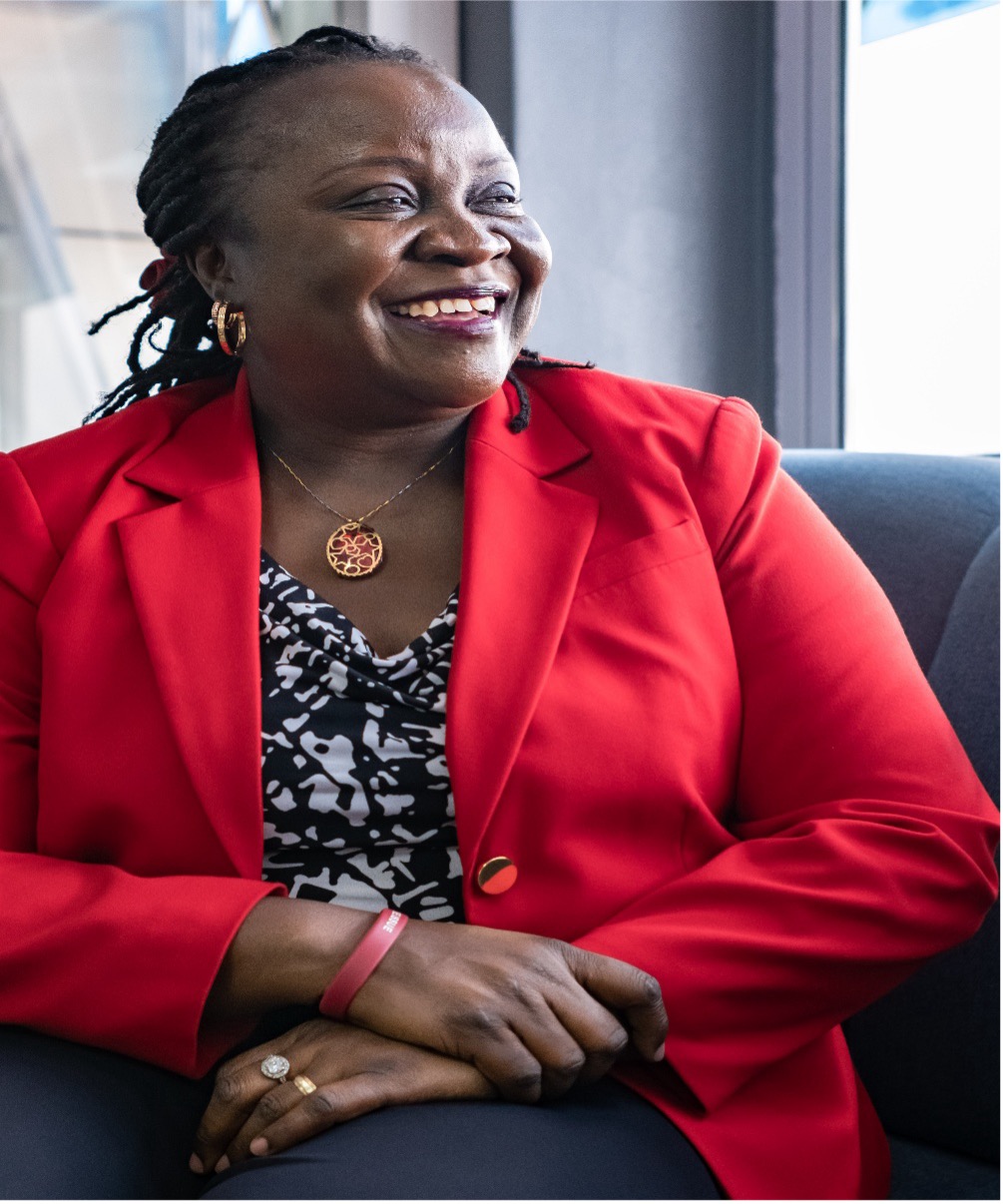
Josephine says that after more than 30 years at Stanbic, the bank has become family
The bank also invested in our well-being and really trained us. There was also access to staff loans, which helped many of us improve our lives and achieve personal goals. Just as importantly, if you worked hard and performed well, you could clearly see a path for career progression. That created motivation and a sense of purpose.
That’s not to say I never explored other opportunities. Over the years, I attended interviews with other banks and considered different options. However, whenever I compared what was on offer with the culture I was experiencing, the people I worked with, the opportunities for growth, and the sense of belonging, the conclusion was always the same. Stanbic was home.
I have turned down at least a dozen offers. What kept me here was not just the job itself, but the culture, the relationships with both staff and customers, the benefits and the feeling that I was part of an organisation that valued and invested in its people. Those are things that are difficult to leave behind.
The bank is marking 35 years this year, what comes to mind for you?
I am privileged to have been part of that story right from the start. We have been at the vanguard of Uganda’s transformation with impact across infrastructure, job creation, and enterprise development, among others. The bank now employs over 2,060 people, each one of them supporting at least 7 to ten people.
We have helped drive financial inclusion, break barriers to financial access, and championed economic participation of women, youth, and farmers. Through our corporate social investment, we have created a platform for young people to showcase their entrepreneurship potential and continue to partner with the Ministry of Health to improve maternal health outcomes.
I feel incredibly proud of our contribution to Uganda’s growth, as prescribed by our purpose.
Do you see yourself in the same bank in the next ten or so years?
I am now close to retirement—but like they say, that doesn’t mean I am tired. I am cheerfully looking forward to joining my husband in running the family business. But I can only predict further growth if the bank stays on its current path. And as we say at Stanbic, once a member of the blue family, always one. I will remain in touch and an ambassador at large for the brand.
What would you tell today’s young version of Josephine, just starting their banking career?
Patience is a virtue. You cannot run before you crawl. If you choose to learn, the growth opportunities in banking are immense. Don’t be fixated on one thing because your calling might be somewhere else. Be open-minded, agile and flexible. There is no script for young people. Leaders in the sector should be accommodating and patient with young folks.
Walk with them, and they will flourish. Lastly, I can’t thank God enough for opening these doors of opportunity for me and my family, that has been my support system over the years and, frankly, still are.
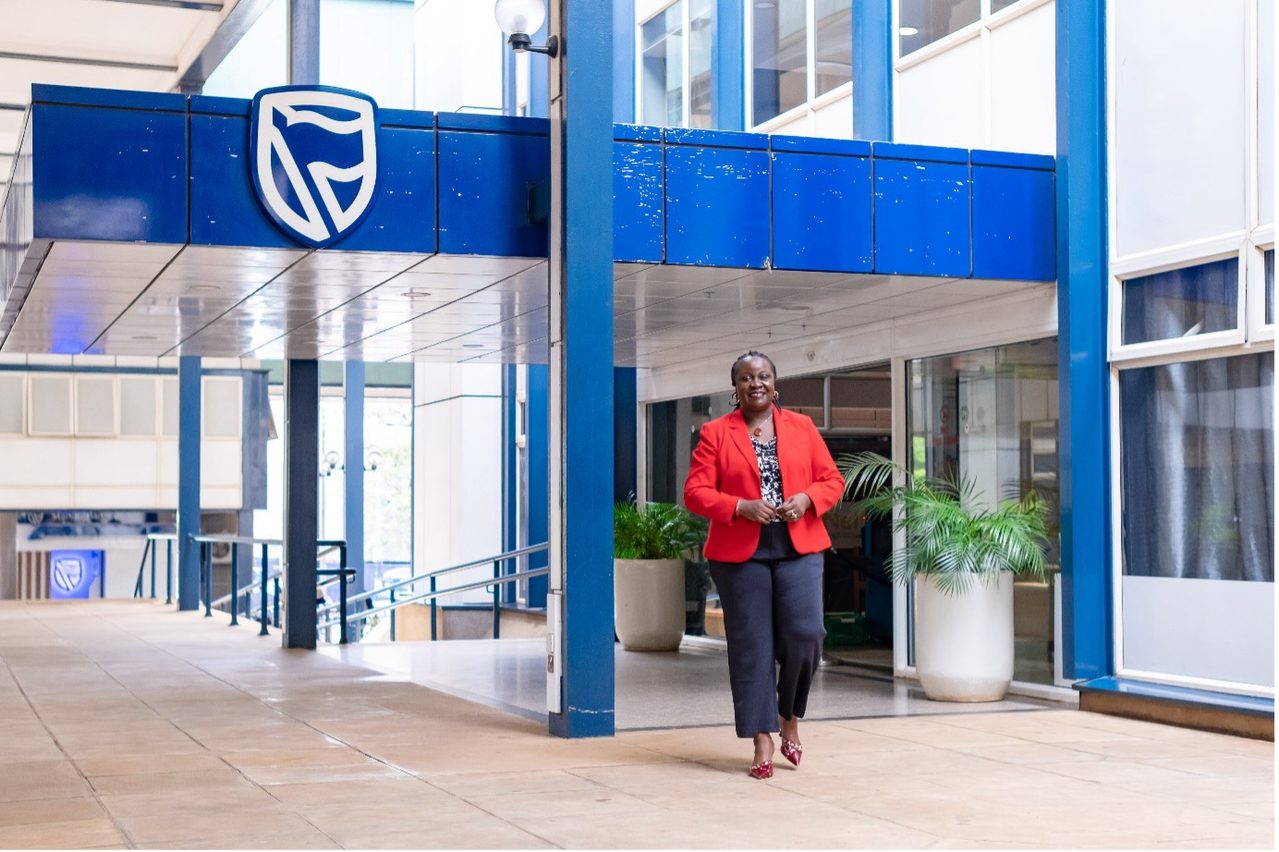
As Josephine draws closer to retirement after more than 30 years in banking, she is grateful for the opportunity to have served, friends made, and clients supported