

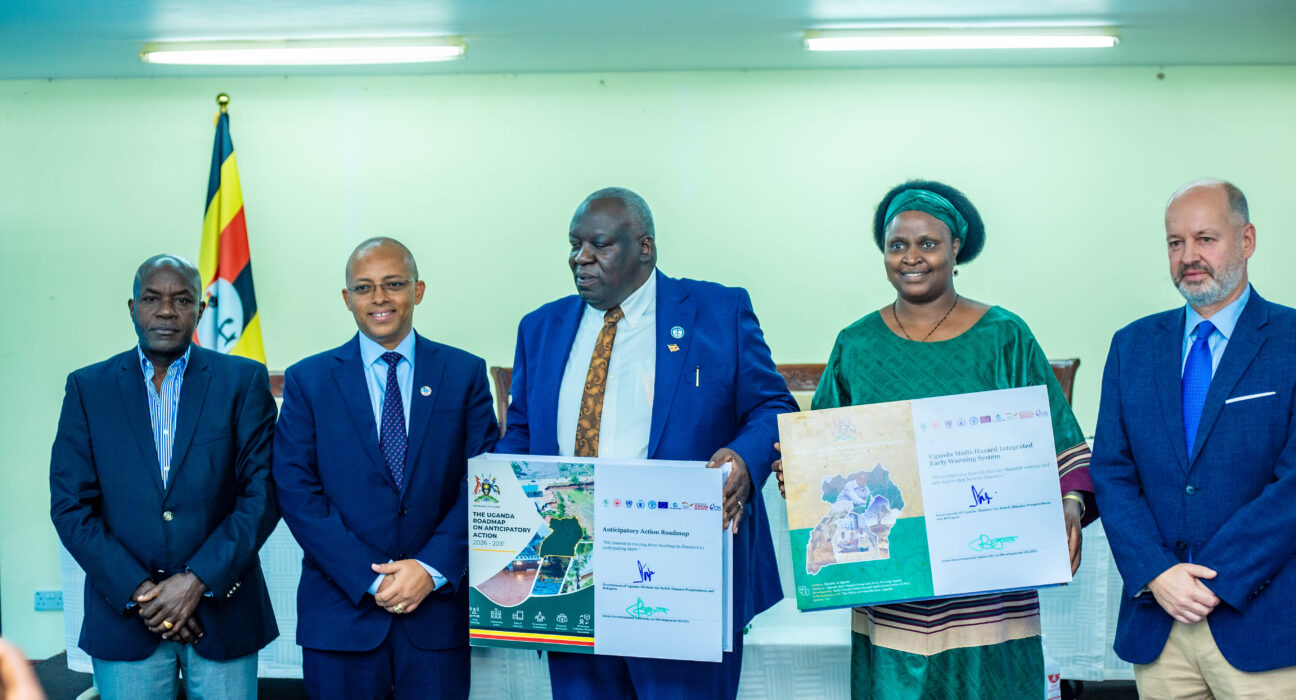
Uganda has launched the Uganda National Multi-Hazard Integrated Early Warning System (U-MHIEWS) and the Uganda Anticipatory Action Roadmap covering the period between 2025 and 2031.
The U-MHIEWS and the roadmap were launched on Friday at Imperial Resort Beach Hotel in Entebbe by the Minister for Relief, Disaster Preparedness and Refugees, Sam Engola, alongside the Permanent Secretary in the Office of the Prime Minister, Alex Kakooza, and representatives from the World Food Programme (WFP), the Food and Agriculture Organization (FAO), and the Intergovernmental Authority on Development (IGAD).
The roadmap is a national framework aimed at transforming the country’s disaster management approach from reacting to emergencies after they occur to taking early, forecast-based action before disasters strike.
Meanwhile, the U-MHIEWS is a platform that integrates information on multiple hazards and sectors to deliver timely warnings, reach more people, and enable faster, better-informed responses.
The roadmap seeks to ensure Uganda acts on scientific forecasts and early warning information before disasters such as droughts, floods, landslides, disease outbreaks, and pest invasions escalate into humanitarian crises.
Engola said these efforts will enable Uganda to transition from reactive to proactive disaster management.
“The launch of the Uganda Multi-Hazard Integrated Early Warning System and the Anticipatory Action Roadmap 2025–2031 is an important milestone in our country’s efforts to strengthen resilience and safeguard the well-being of our people,” Engola said.
“The roadmap reflects the government’s commitment to shifting from reactive disaster response to proactive preparedness, protecting lives, livelihoods, national development gains, and reducing humanitarian response costs.”
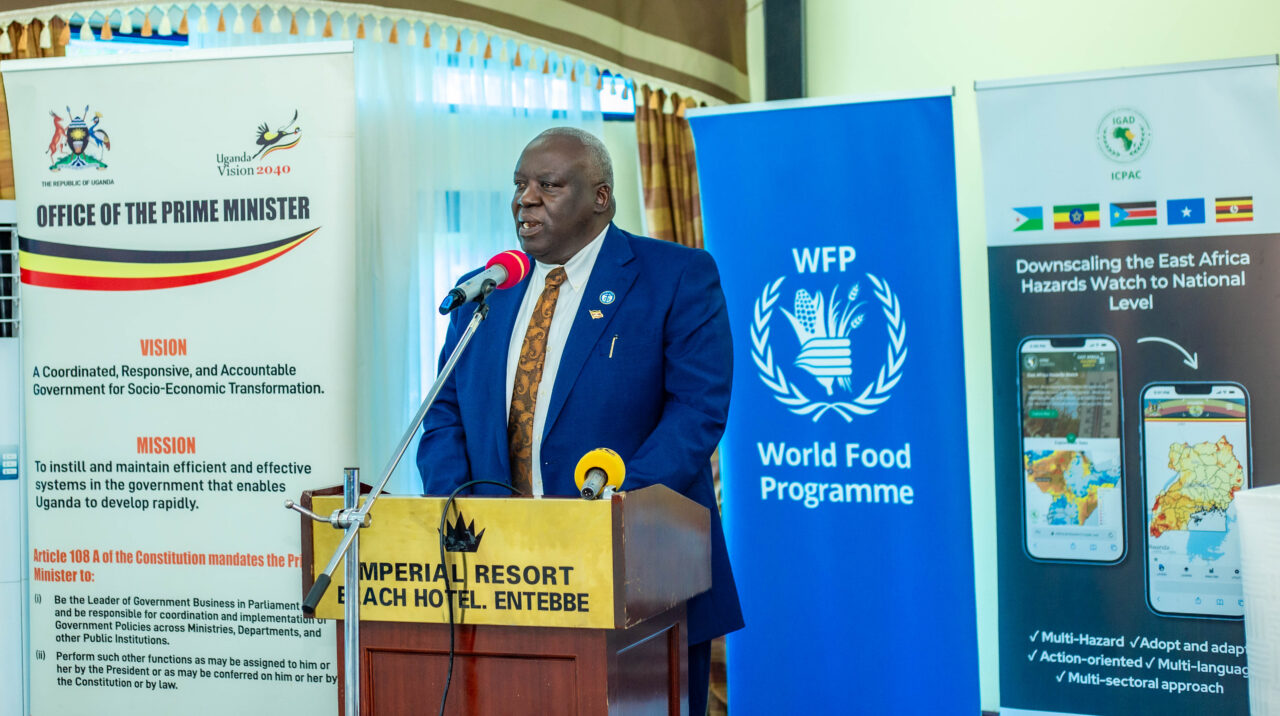
Hon. Sam Engola, the Minister of Relief, Disaster Preparedness and Refugees, speaks during the launch ceremony at Imperial Resort Beach Hotel in Entebbe
Kakooza said the roadmap is a major step towards building a more resilient Uganda.
“Today marks an important milestone in Uganda’s journey towards building a more resilient nation,” he said.
“This roadmap represents a clear national commitment to shifting from reactive disaster response to a proactive approach that anticipates risks and takes action to protect lives and livelihoods.”
He added that the roadmap aligns with Uganda’s national development priorities as well as international frameworks, including the Sendai Framework for Disaster Risk Reduction and regional commitments under IGAD.
Roadmap pillars
The roadmap is built around six pillars – strengthening early warning systems; expanding anticipatory action; integrating disaster preparedness into government policies; improving coordination; ensuring sustainable financing; and promoting research and learning.
“Launching this roadmap today is only the beginning,” Kakooza said. “Success will be measured not by this document itself, but by the lives we protect, the livelihoods we preserve, and the communities made more resilient through its implementation.”
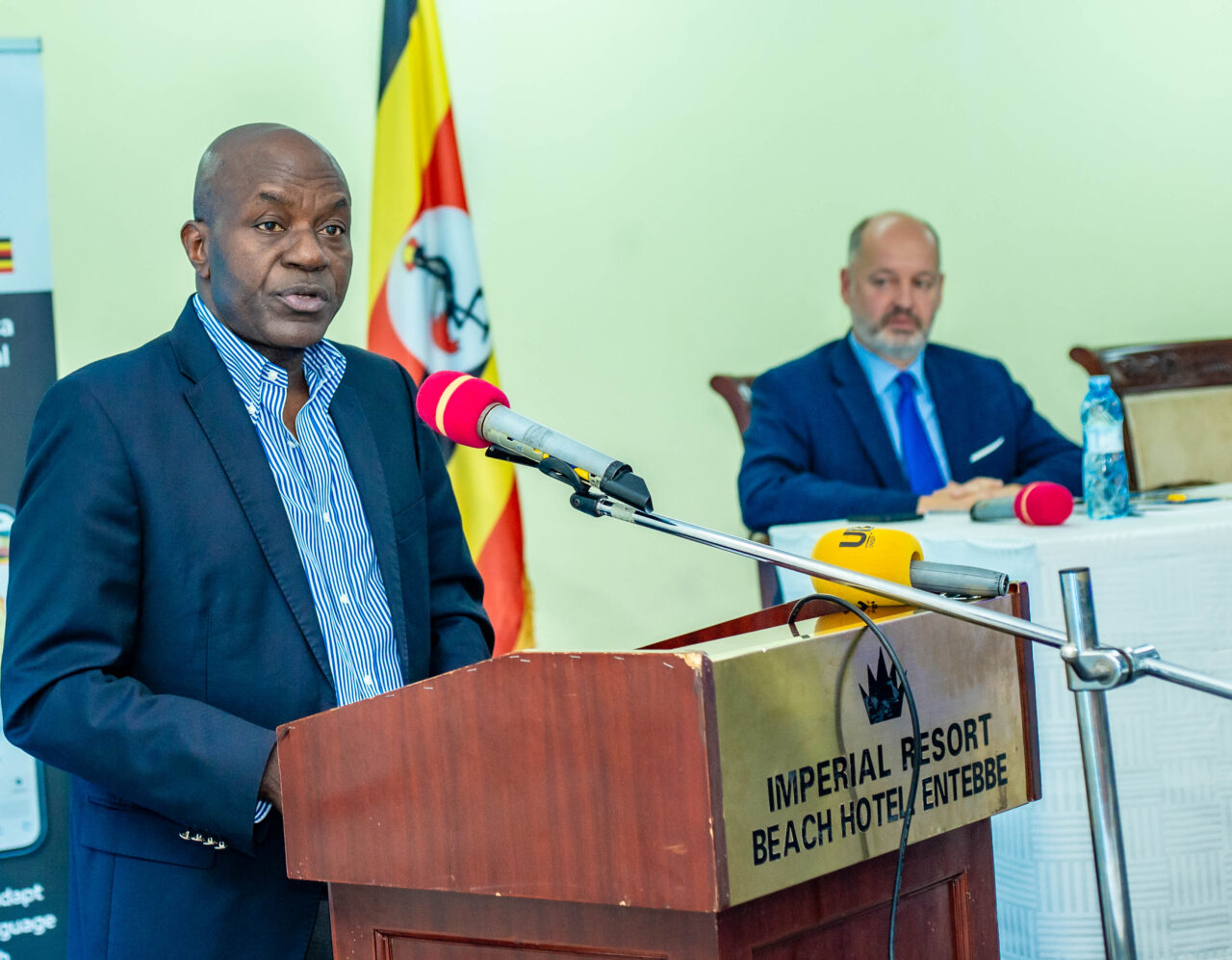
Mr Alex Kakooza, the Permanent Secretary in the Office of the Prime Minister, speaks during the launch ceremony at Imperial Resort Beach Hotel in Entebbe
The IGAD Head of Mission to Uganda, Joselyn Bigirwa, said Uganda’s initiative would contribute significantly to strengthening disaster risk reduction efforts across the region.
“Uganda’s achievements today contribute directly to the implementation of the IGAD Regional Disaster Risk Management Strategy, the African Union Programme of Action for Disaster Reduction, and the Sendai Framework for Disaster Risk Reduction,” she said.

IGAD Head of Mission to Uganda, Joselyn Bigirwa, signs the roadmap document during the launch ceremony at Imperial Resort Beach Hotel in Entebbe
Marcus Prior, the acting Country Director of WFP Uganda, described the roadmap as a landmark achievement that demonstrates Uganda’s commitment to acting before disasters occur.
“The launch of this roadmap represents more than the publication of a strategic document,” she said. “It marks a national commitment to a new way of working that uses science, forecasts, risk information, and preparedness systems to protect vulnerable people before a crisis escalates.”